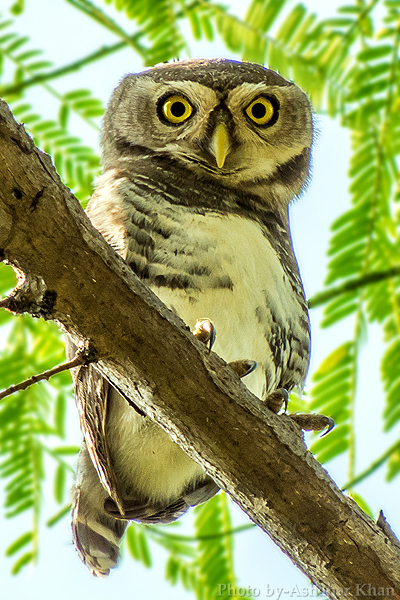
Overview
The long-eared owl (Asio otus), also known as the northern long-eared owl or informally as the lesser horned owl or cat owl, is a medium-sized typical owl with an extensive range. The genus name, Asio, is Latin for "horned owl", and the specific epithet, otus, is derived from Greek and refers to a small eared owl. It breeds in Europe and the Palearctic, as well as in North America.
This owl prefers semi-open habitats, particularly woodland edge, as they to roost and nest within dense stands of wood but prefer to hunt over open ground.
Summary from Wikipedia, available under CC BY-SA 4.0.
Range and habitat
Continents
Countries
- Afghanistan
- Albania
- Algeria
- Andorra
- Armenia
- Austria
- Azerbaijan
- Belarus
- Belgium
- Bosnia and Herzegovina
- Bulgaria
- Canada
- China
- Croatia
- Cuba
- Cyprus
- Czechia
- Denmark
- Egypt
- Estonia
- Finland
- Georgia
- Germany
- Greece
- Hungary
- Iceland
- India
- Iran
- Iraq
- Ireland
- Israel
- Italy
- Japan
- Jordan
- Kazakhstan
- Kosovo
- Kyrgyzstan
- Laos
- Latvia
- Lebanon
- Libya
- Liechtenstein
- Lithuania
- Luxembourg
- Malta
- Mexico
- Moldova
- Monaco
- Mongolia
- Morocco
- Myanmar
- Netherlands
- North Korea
- North Macedonia
- Norway
- Pakistan
- Palestine
- Poland
- Romania
- Russia
- San Marino
- Serbia
- Singapore
- Slovakia
- Slovenia
- Spain
- Sweden
- Switzerland
- Syria
- Taiwan
- Tajikistan
- Tunisia
- Turkey
- Turkmenistan
- Ukraine
- United Kingdom
- United States
- Uzbekistan
Sources and further reading
- Wikipedia: Long-eared owl
- eBird: sightings, maps and photos
- xeno-canto: sound recordings
- Birds of the World: full species account (subscription)
- BirdLife DataZone: status and threats
- IUCN Red List (threat status)
- AviList global checklist (taxonomy)
Last updated September 29, 2026.