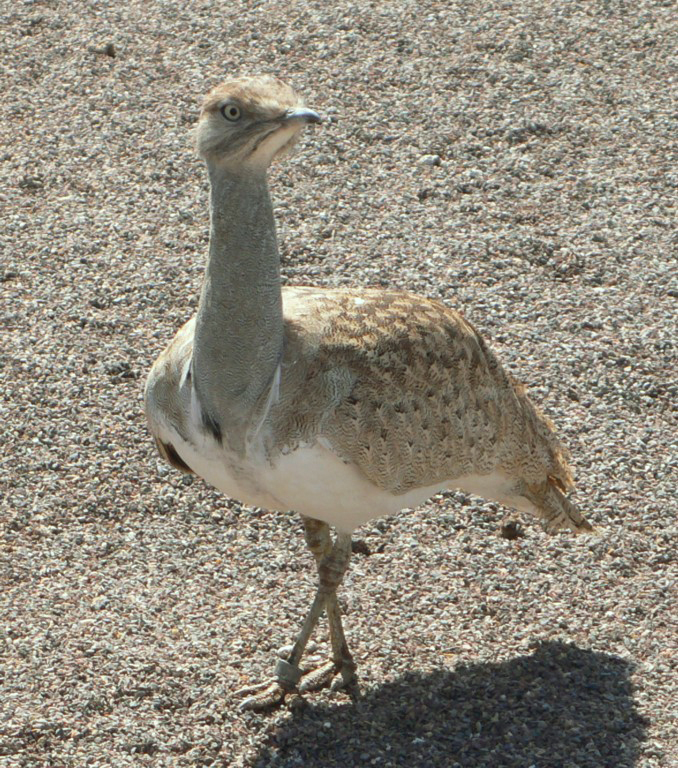
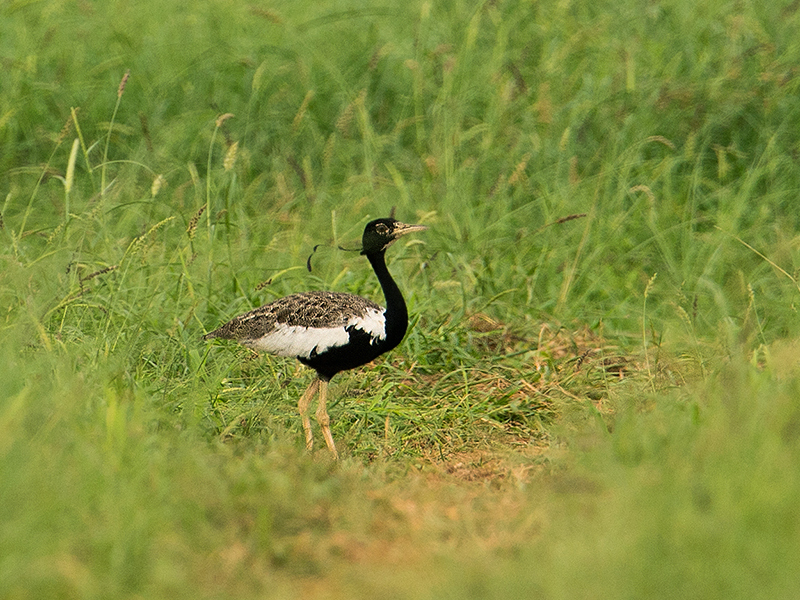
Great Bustard
Otis tarda
ENEndangered
- Length
- 75–105 cm
- Family
- Bustards (Otididae)
- Order
- Otidiformes
Best months to see it
- JanJanuary: Poor or no data
- FebFebruary: Poor or no data
- MarMarch: Best
- AprApril: Best
- MayMay: Best
- JunJune: Poor or no data
- JulJuly: Poor or no data
- AugAugust: Poor or no data
- SepSeptember: Poor or no data
- OctOctober: Poor or no data
- NovNovember: Poor or no data
- DecDecember: Poor or no data
BestGoodFair
Overview
A full account of this species is being written.
Diet: Plants, seeds and insects.
How to identify it
- One of the heaviest flying birds; males are much larger than females
- Grey head and neck with a rufous, black-barred back
- Displaying males turn into a white 'foam' of feathers
Voice
Mostly silent.
Where to see it
- Extremadura, Spain
- Hortobágy, Hungary
Destination guides featuring this bird

Hungary
Hortobágy National Park
Wide puszta grasslands and fishponds with bustards and huge autumn crane roosts.
- JJanuary: Poor or no data
- FFebruary: Poor or no data
- MMarch: Poor or no data
- AApril: Best
- MMay: Best
- JJune: Good
- JJuly: Poor or no data
- AAugust: Poor or no data
- SSeptember: Good
- OOctober: Best
- NNovember: Good
- DDecember: Poor or no data

Spain
Extremadura
Open plains and cork-oak woods for bustards, vultures and eagles.
- JJanuary: Poor or no data
- FFebruary: Good
- MMarch: Best
- AApril: Best
- MMay: Best
- JJune: Poor or no data
- JJuly: Poor or no data
- AAugust: Poor or no data
- SSeptember: Good
- OOctober: Good
- NNovember: Poor or no data
- DDecember: Poor or no data
Range and habitat
Countries
Habitats
Sources and further reading
- eBird: sightings, maps and photos
- xeno-canto: sound recordings
- Birds of the World: full species account (subscription)
- BirdLife DataZone: status and threats
- IUCN Red List (threat status)
- AviList global checklist (taxonomy)
Last updated September 29, 2026.